FEATURED IN AUSTRALIAN RESOURCES & INVESTMENT
Repeated component failure rarely remains confined to the component itself. It increases maintenance demands, disrupts equipment availability and requires more interventions to keep machinery operating.
For reliability teams, a predictable pattern of failure should therefore be treated as more than a maintenance problem.
Understanding why a failure continues to occur can reveal a weakness that replacement alone will never address, creating an opportunity to reduce recurring interventions and support more consistent operational performance.
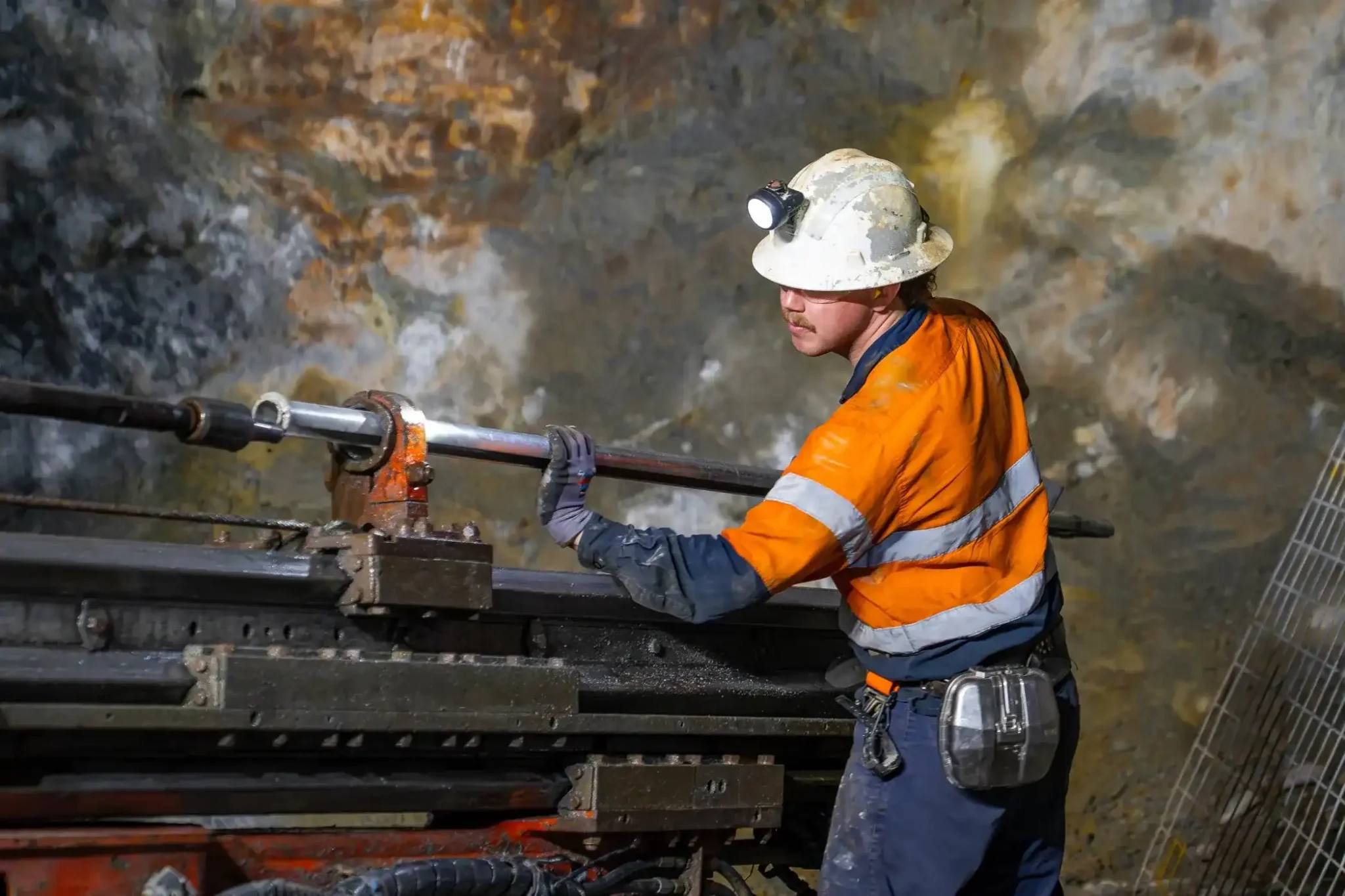
MASPRO encountered this situation with TFX hydraulic feed cylinders operating on underground development jumbos.
Premature cylinder failure had become a recurring issue. Rather than replacing the cylinder again, MASPRO focused on identifying and addressing the condition driving the repeated failures.
When repeat replacement becomes a reliability problem
Across the operation, six development jumbos represented 12 booms in service over the course of a year.
Each cylinder replacement introduced additional maintenance activity, unplanned downtime, costs and personnel exposure.
MASPRO reviewed the TFX feed system under its operating conditions to understand why the issue was recurring. The investigation identified trapped air between the floating piston and piston rod as a key contributor to internal failure.
That finding shifted the engineering focus from making the existing design tolerate the problem for longer to addressing the condition causing the issue.
Re-engineering the failure pathway
Based on field feedback and site collaboration, MASPRO redesigned the transfer tube positioning, internal cylinder geometry and air-management pathway within the assembly.
This is where reproduction and re-engineering diverge.
A reproduced component can match an existing specification. However, if that specification contains a condition that contributes to repeated failure, reproducing it can also replicate the same failure behaviour.
Re-engineering goes further by examining why the existing design failed and using those insights to develop a more effective solution.
The revised cylinder was trialled and validated on active underground development fleets, demonstrating improved performance in service.
Results measured across the fleet
The impact became visible at a fleet level. Across six development jumbos, cylinder usage fell by 25 per cent over a 12-month period, with a 54 per cent cost saving compared with original equipment manufacturer supply.
The MASPRO cylinder also outperformed the unit previously supplied through the Service Exchange Program, reducing cylinder consumption by 61 per cent over the same period.
Performance re-engineered, not reproduced
MASPRO manufactures precision-engineered components for mining equipment, backed by application-driven engineering and direct experience of the conditions in which those components operate.
Performance Re-Engineering builds on that capability by treating repeated failure as information that can reveal where an engineered design improvement can change the outcome. The TFX feed cylinder case demonstrates that principle in practice.
The approach goes beyond original equipment manufacturer specifications by targeting real operating loads, wear modes and failure patterns to improve durability, reliability and lifecycle performance.