The wrong fix for the right problem
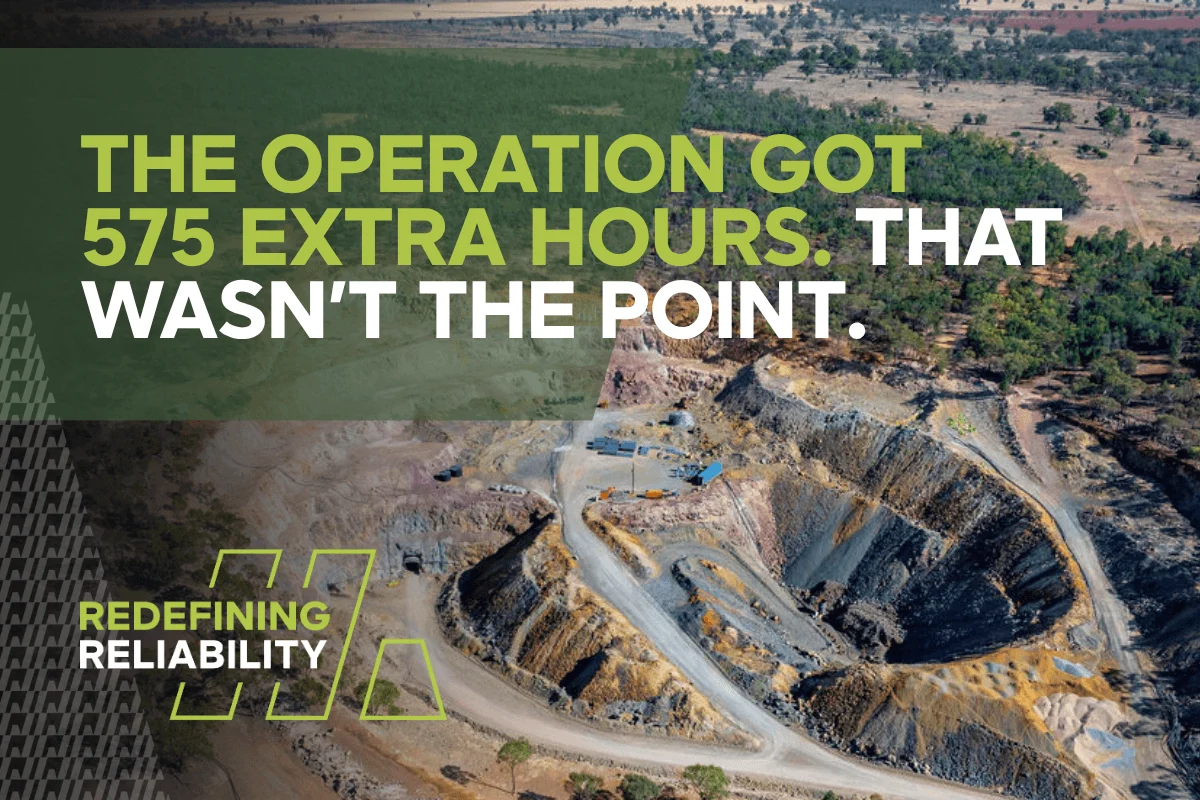
A surface drill rig in Western Australia was going through breakout jaws every 125 hours. The maintenance team knew the number. They planned around it. They ordered ahead. What they didn’t have was a way to stop the cycle.
The obvious fix was a more durable jaw. Harder material. Better wear resistance. Longer life.
That would have been the wrong answer.
The issue wasn’t just that the jaws wore out. What mattered was how often that forced everything else to stop.
That’s a very different reliability problem.
Reliability is about intervention frequency, not component survival
One of the most common misconceptions in maintenance is that reliability and durability are the same thing.
They aren’t.
A component can survive for a long time and still create operational instability. And a component can deliver extraordinary reliability, not because it never wears, but because it reduces how often people need to interact with the system.
From a system perspective, every intervention carries cost. Not just the parts cost. Planning effort, maintenance labour, production disruption, safety exposure, operational variability — every one of these accumulates before anyone has touched a component.
The goal is to reduce how often wear forces the operation to respond.
Engineering the failure behaviour
Rather than simply increasing hardness or adding material, MASPRO engineers examined how the breakout jaw was interacting within the application. Load distribution. Contact surfaces. Wear progression. Exactly how did the material perform under real operating conditions?
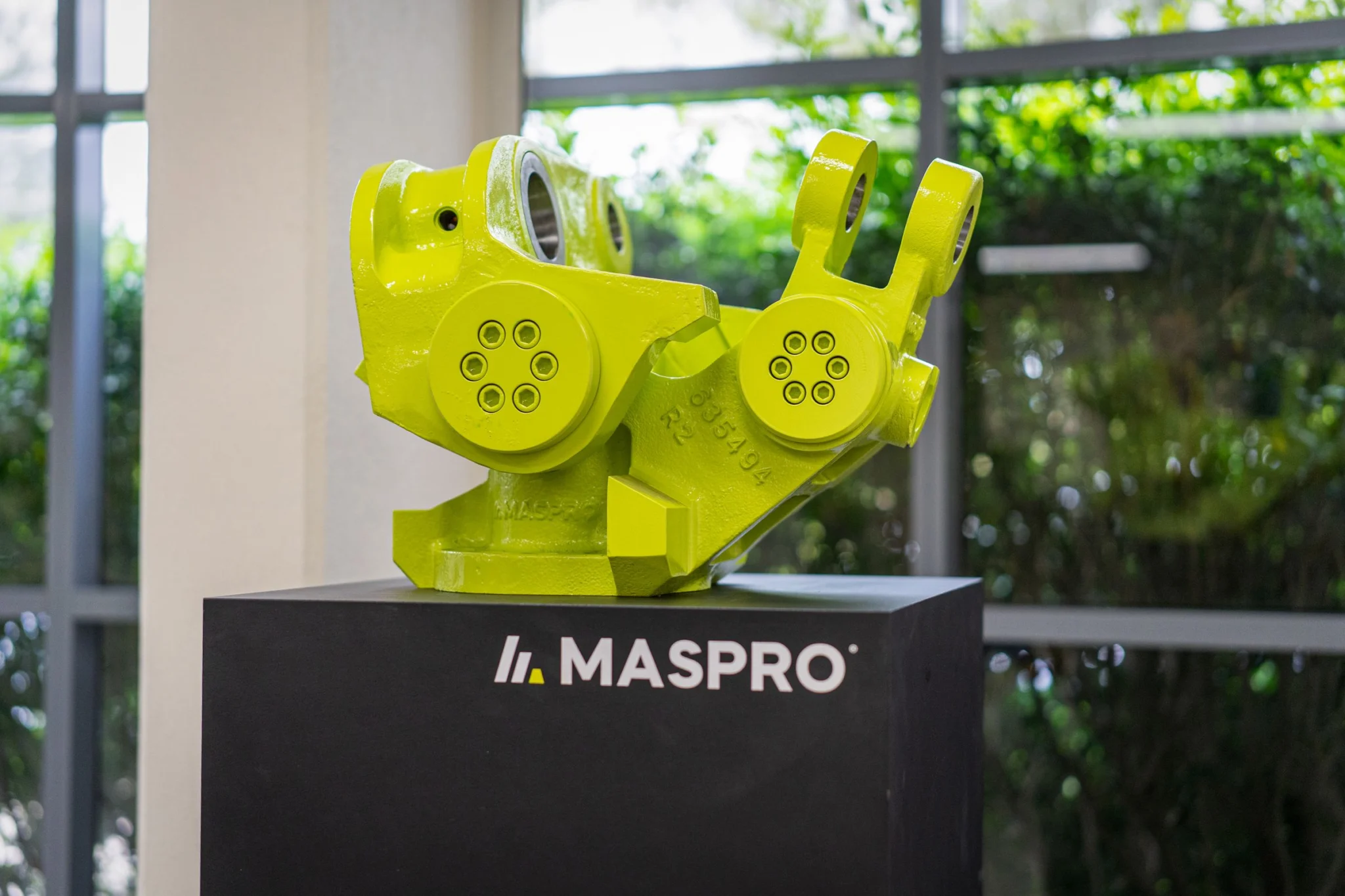
The resulting design incorporated engineered improvements including tungsten inserts, enhanced wear surfaces, improved gripping performance, and increased jaw strength.
The outcome was significant.
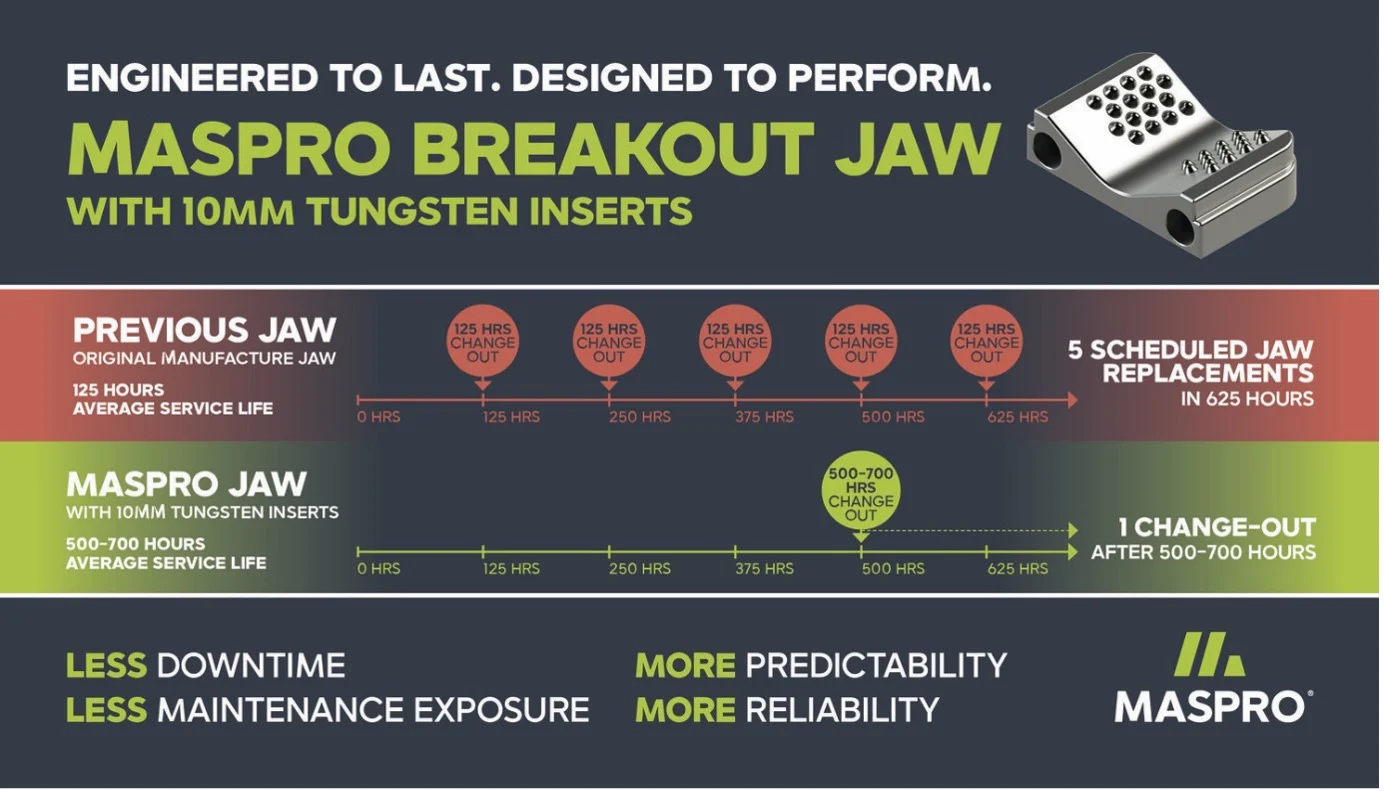
Average service life increased from approximately 125 hours to between 500 and 700 hours in the same application. That represents up to 5.6 times longer service life. But focusing solely on the hours misses the bigger story.
The real outcome wasn’t longer jaw life. It was four times fewer maintenance interventions across the operating year. Every avoided intervention removed labour, planning effort, production disruption, and safety exposure from the system.
That is reliability at a system level. Not simply surviving longer, but reducing the need to intervene.
What 575 extra hours actually means in an operation
When a jaw was replaced every 125 hours, the maintenance team wasn’t just managing wear. They were managing a calendar. Every few weeks: parts on hand, crew scheduled, rig offline, change-out complete, back to work.
At 500–700 hours, that cycle happens four times less. It barely happens at all by comparison. The planning burden drops. The labour requirement drops. The number of times someone is working near a stopped drill rig drops.
None of that appears on the component’s purchase order. But every experienced maintenance team knows exactly what it’s worth.
Every avoided intervention removes labour hours, reduces production interruptions, and frees maintenance resources for higher-value work.
What this means
The most valuable engineering improvements don’t simply make components stronger. They reduce the frequency with which operations need to react. Mining operations don’t succeed because parts never wear. They succeed because failure behaviour is understood, controlled, and predictable.
The less often a system demands intervention, the more control an operation gains over productivity, planning, and risk.
That’s why reliability should never be measured solely in hours.
It should be measured in interruptions avoided.
A question worth considering
If a component lasts longer but still forces frequent intervention, is it really improving reliability — or simply delaying the next interruption?