In mining operations, reliability problems are usually associated with obvious failure. A machine stops. A component breaks. Production drops. The issue becomes visible, measurable, and urgent.
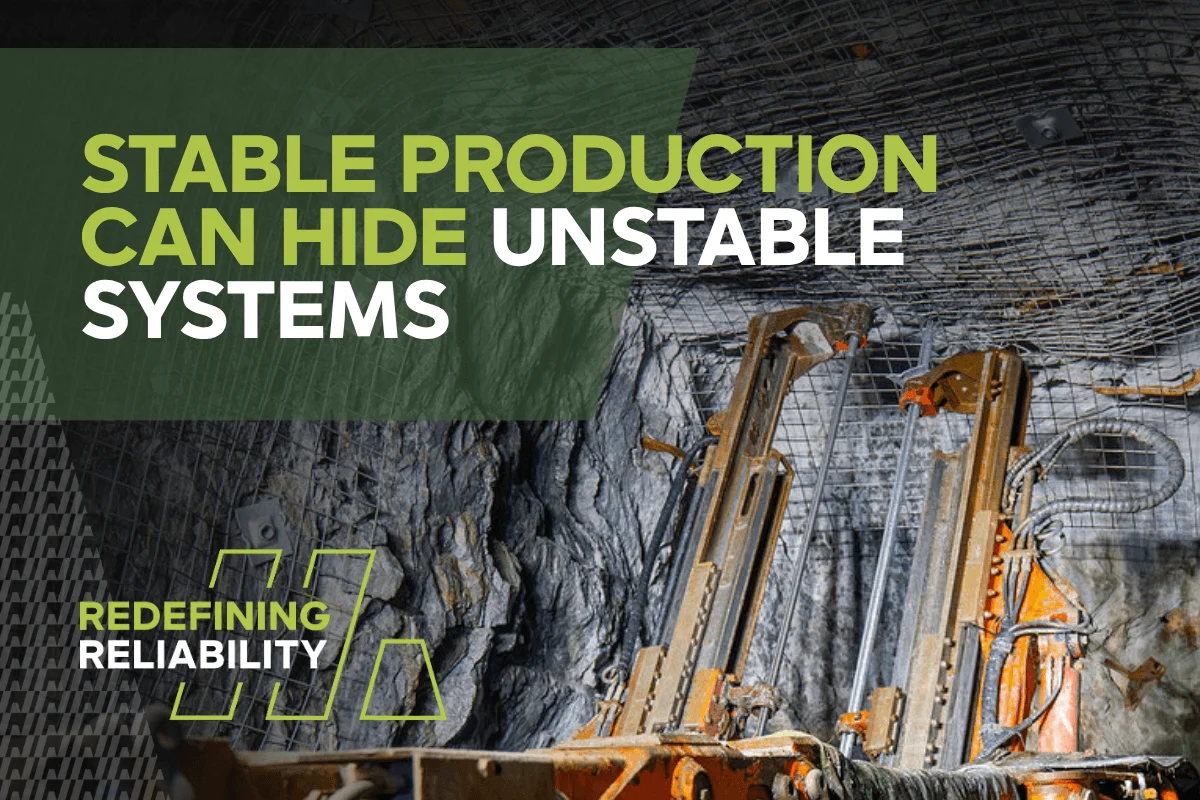
But some of the most dangerous reliability failures never present as an obvious failure at all. Because systems can remain productive long after they’ve become unstable.
- A machine develops persistent vibration.
- Operators learn which alarms can be ignored.
- Maintenance teams repeatedly adjust the same component.
- A workaround becomes part of the process.
- A known issue is managed rather than eliminated.
Production continues.
And because output remains stable, the system is often assumed to be reliable. But stable output does not always mean a stable system.
Sometimes it means the operation has become highly dependent on people compensating for instability.
When adaptation hides the real problem
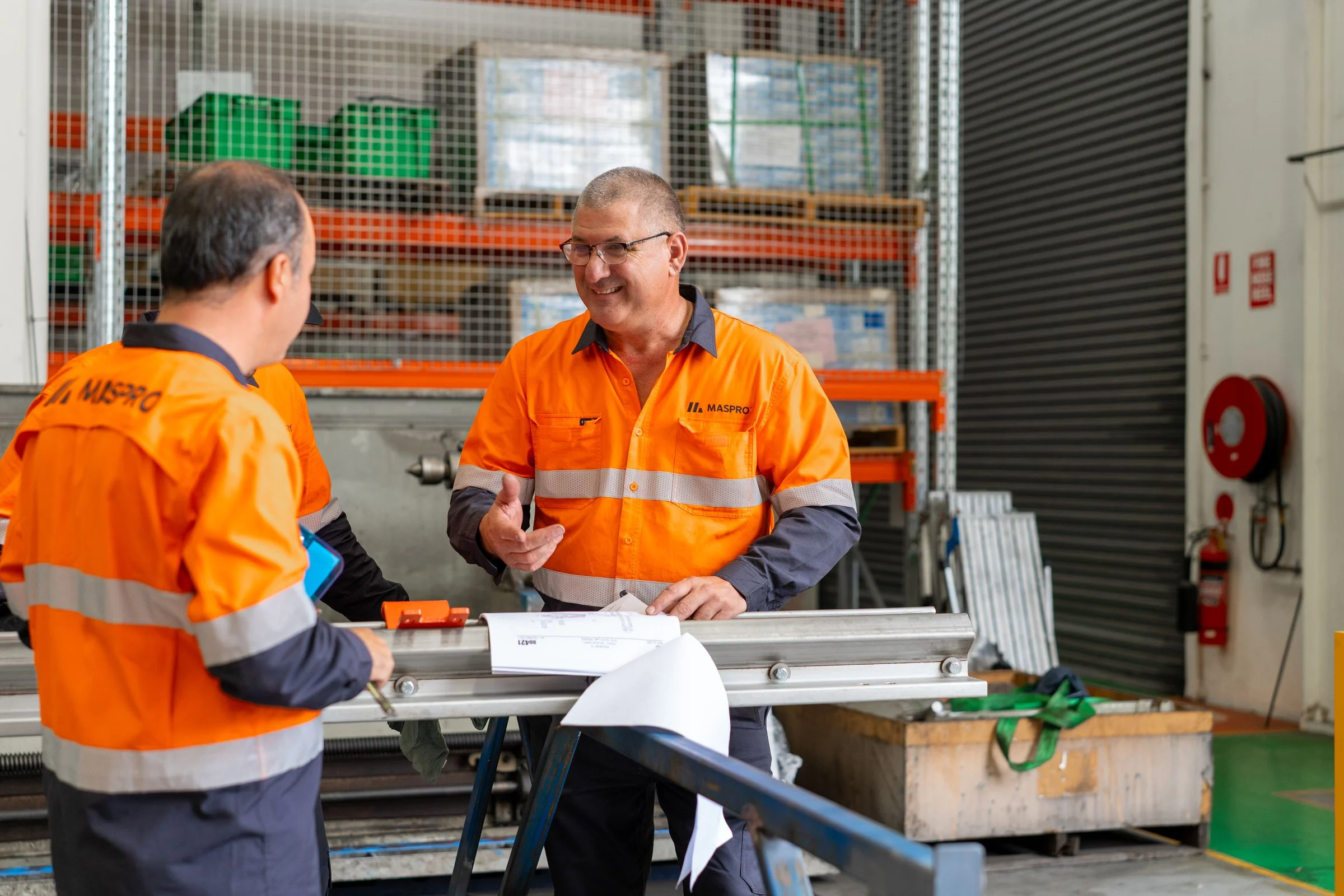
Operational teams are exceptionally good at keeping production moving under pressure. That adaptability is one of mining’s greatest strengths. It is also one of the reasons unstable systems can continue operating far longer than they should.
When systems degrade gradually, people adapt around them:
- Manual interventions increase
- Additional inspections are introduced
- Shutdown work expands
- Maintenance routines become more reactive
- Informal knowledge replaces engineered control
None of these changes happens all at once. And individually, each adjustment feels reasonable. Collectively, they indicate the system is no longer controlling operating conditions consistently on its own.
Risk increases long before failure becomes visible
One of the most dangerous assumptions in reliability is that risk only exists once equipment stops. In reality, operational risk often increases even while production remains stable. Because unstable systems slowly erode operational margin while appearing productive:
- Exposure time increases
- Maintenance complexity grows
- Dependency on individual experience rises
- Predictability decreases
- Recovery becomes harder when conditions finally shift
Eventually, operations become dependent on people continually compensating for problems that the system itself no longer controls.
That is not operational stability. It is operational dependency disguised as reliability.
"Some of the highest-risk systems are the ones still hitting production targets - because instability has been absorbed into everyday work instead of removed from the system." - Jason Kennard , Director of Operations, MASPRO
Reliability begins failing before equipment stops
Reliable systems should not require constant adaptation to remain functional.
They should:
- Behave predictably
- Operate within controlled parameters
- Provide clear early warning signs
- Allow intervention before escalation occurs
When teams spend more time managing recurring conditions than removing their cause, reliability has already started to fail – even if production targets are still being met.
Because uptime alone is not proof of reliability.
It is measured by how much hidden instability the operation must absorb to keep producing.
Redefining reliability
At MASPRO, reliability is not defined by whether equipment can continue operating under deteriorating conditions. It’s defined by whether the system remains predictable, controllable, and recoverable as conditions change.
A reliable operation should not depend on:
- Repeated workarounds
- Constant adjustment
- Tribal knowledge
- Ongoing compensatory maintenance
- Continuous operator intervention
Because every time instability becomes normalised, operational risk becomes harder to see. And once risk becomes normal, it rarely stays controlled for long.
A final operational question
What instability has your operation quietly learned to live with?
Because the longer instability becomes normalised, the harder it becomes to recognise where true reliability has already been lost.