In mining, reliability is usually discussed in terms of mechanical failure.
- A cylinder cracks.
- A component reaches the end of its service life.
- A system stops.
But across many operations right now, a different reliability problem is becoming harder to ignore.
Middle East disruption is putting pressure on global shipping routes. OEM lead times are stretching. And mines that depend on long, international supply chains are being reminded of something uncomfortable:
- The part may exist.
- The maintenance may be planned.
- The machine may be ready.
- But the operation is still waiting.
From the system’s perspective, the outcome is the same as any mechanical failure.
Production stops.
That is no longer just a supply chain issue.
It is a reliability issue.
When supply chains define reliability
For years, global supply chains made parts availability feel predictable. Components could be sourced internationally with stable lead times. Maintenance planning is adapted to that rhythm. Procurement systems assumed it.
That assumption is now under pressure.
Shipping routes are shifting. Freight timelines are less certain. Manufacturing priorities are changing. OEM lead times are extending. The result is a failure condition that sits outside traditional reliability models:
A system that is ready to run, but cannot recover.
OEM dependency is now a reliability risk
For many mining operations, OEM dependency has created an assumption of certainty. If a component reaches end of life, the replacement can be ordered. If it can be ordered, it will arrive. If it arrives, the system recovers. That logic only works when supply chains are predictable.
Right now, they are not.
Long, global OEM supply chains are exposed to disruptions beyond mines’ control, including freight delays, manufacturing bottlenecks, regional instability, and shifting logistics routes. When those systems tighten, recovery time becomes uncertain.
And once recovery time becomes uncertain, reliability is compromised.
Waiting behaves like failure
From an operational perspective, waiting is not a soft inconvenience. It behaves exactly like failure.
It creates:
- Production stoppage
- Maintenance disruption
- Idle labour
- Planning uncertainty
- Escalating operational risk
The component may not have failed unexpectedly. The maintenance team may have done everything right. But if the system cannot recover because the replacement component is unavailable, the result is the same.
A delayed component is no different to a failed one.
Why mining operations feel this first
Mining operations are particularly exposed to this type of risk.
Distance from global manufacturing centres increases reliance on freight. Equipment is highly specialised, limiting interchangeability. Downtime carries immediate and compounding cost.
Waiting is rarely neutral.
It accumulates quickly — across production, maintenance, and planning.
Made in Australia means control over recovery
When supply chains become unstable, the location of manufacturing stops being a procurement detail and becomes an operational decision.
Operations that rely entirely on long international supply chains inherit their volatility. They also surrender control over how quickly a system can recover when a critical component reaches its limit.
Local manufacturing changes that. Made in Australia is not only about faster lead times. It is about control.
Control over recovery time. Control over maintenance planning. Control over production continuity. Control over uncertainty. When components are engineered and manufactured in Australia, recovery becomes more predictable. Maintenance windows become more manageable. Exposure to global disruption is reduced.
This is exactly why MASPRO operates the way we do. We manufacture in Australia because operations do not need more uncertainty when systems are already under pressure. They need a reliable path back to uptime.
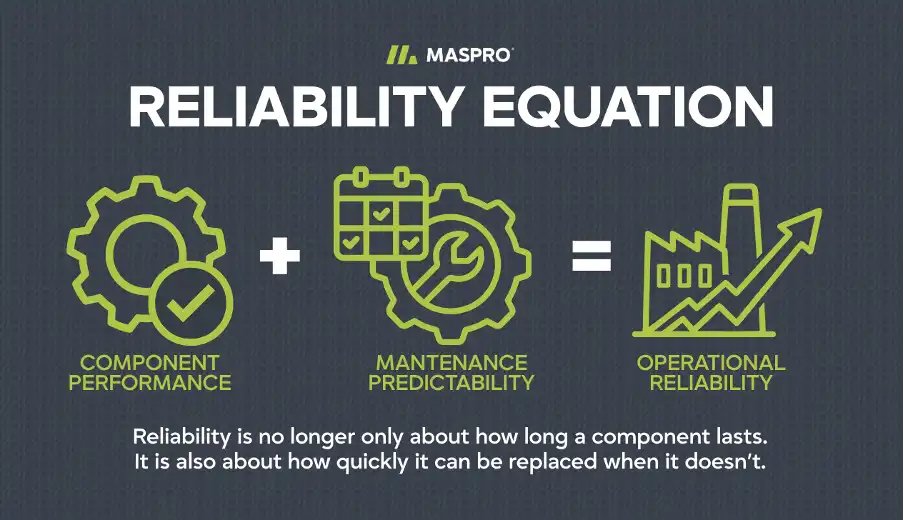
Because reliability is not only about how components perform in service. It is about how quickly the system can recover when they don’t.
Reliability beyond the component
Reliability has never been just about durability. It is the interaction between engineering design, operating conditions, maintenance practices, and system support.
Now, supply availability is part of that system.
A component that performs exactly as expected but cannot be replaced in time still creates operational risk. From a system perspective, reliability must include not only how parts fail, but how predictably the system can recover when they do.
A final operational question
When a component reaches the end of its service life, and it will, the critical question is no longer just how it performed. It is whether the operation can recover without waiting on a supply chain it does not control.
Because that is where the risk now sits.
In the machine that is ready, but offline. In the maintenance window that cannot be confirmed. In the recovery time no one can guarantee.
That uncertainty is not theoretical. It is operational.
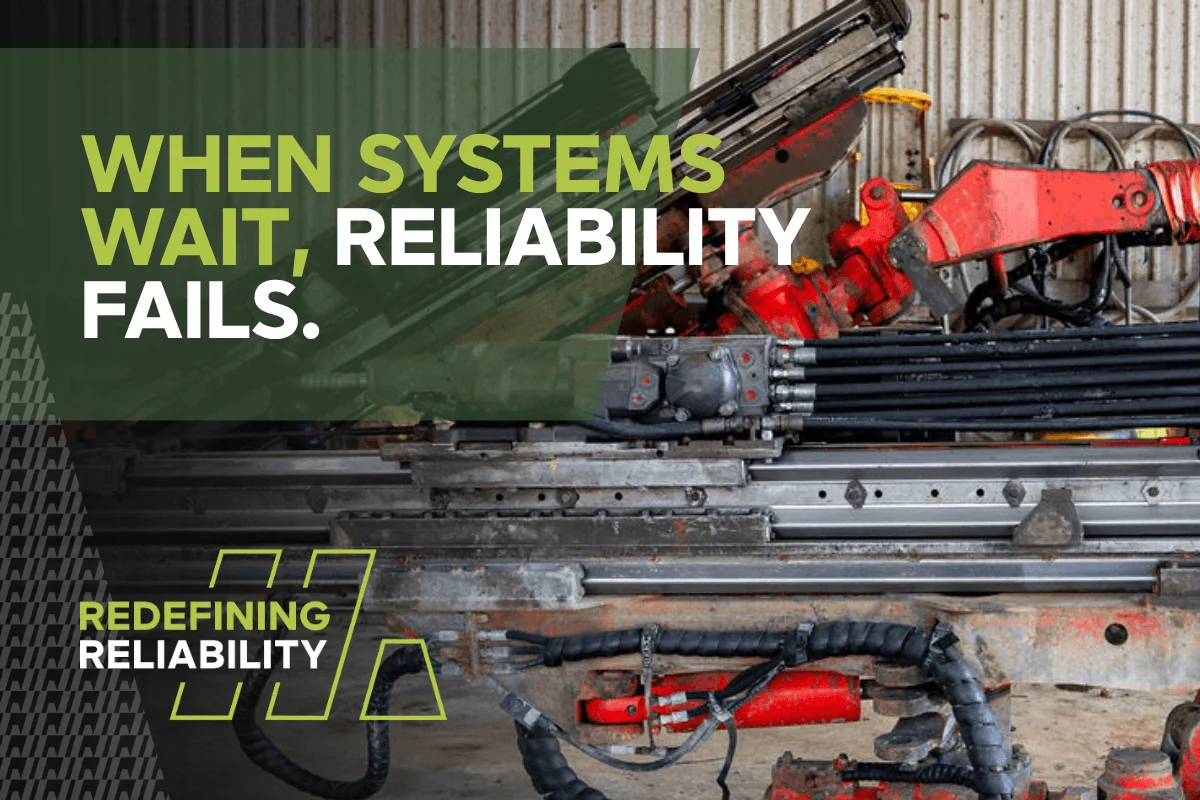
And in mining, a system that is waiting is already failing.