Mining operations are exceptionally good at tracking failure. We record breakdowns. We measure downtime. We investigate incidents. We analyse root causes. Yet some of the most expensive reliability problems never appear in a failure report at all. Because the equipment never actually fails. Instead, the operation adapts.
A maintenance task takes a little longer than it should. A component is replaced more frequently than expected. A recurring issue gets absorbed into the shutdown plan. A workaround becomes standard practice.
Over time, these adjustments stop feeling temporary and start feeling normal. That is where reliability drift begins. Not through catastrophic failure. Through the gradual acceptance of recurring intervention.
When recurring intervention becomes normal
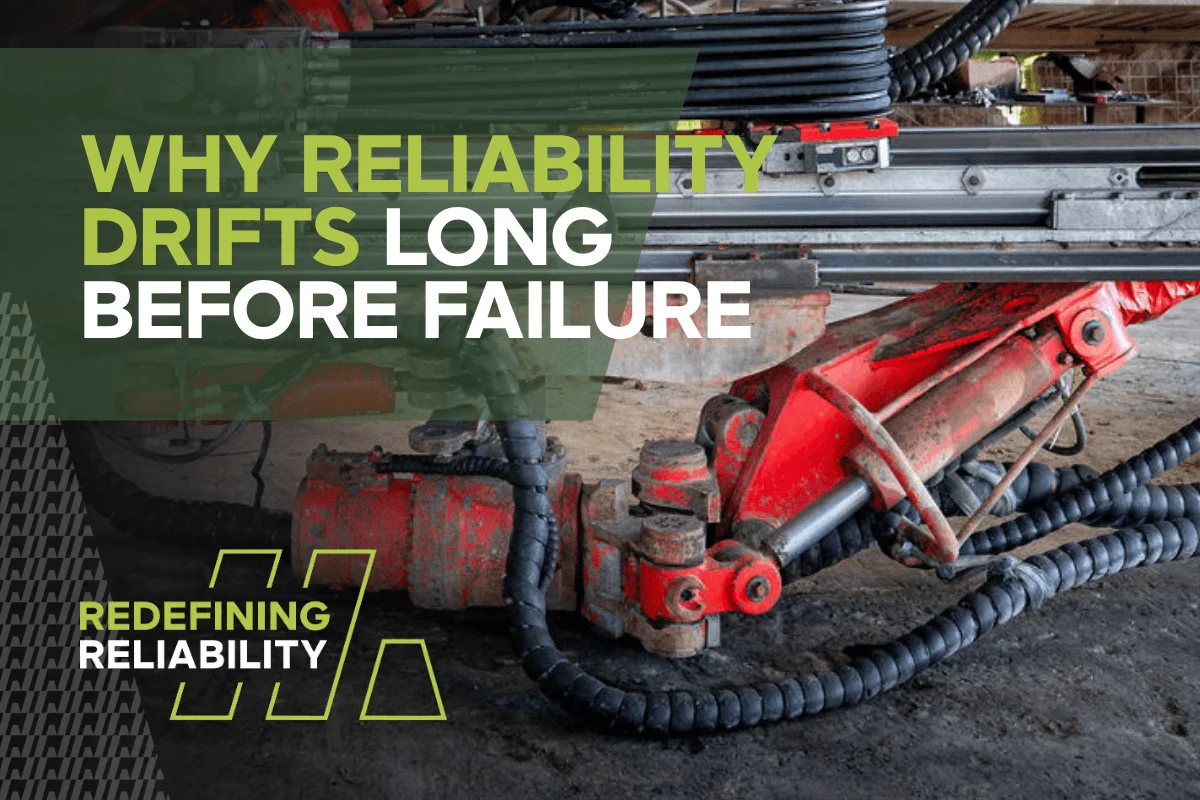
Recently, MASPRO worked with an underground contractor operating development drills compatible with Sandvik DD421 machines.
The operation was experiencing high feed rail rope consumption in demanding underground conditions. Vibration, cyclic loading, and abrasive environments were accelerating wear and driving frequent replacements across the fleet.
No catastrophic breakdown.
No incident investigation.
Just a recurring maintenance task that continued to consume labour, time, and operational attention.
Feed rope consumption had reached 188 units annually, while Rope 2470 usage had climbed to 76 units per year.
The issue wasn’t hidden. Everyone knew it existed.
Like many reliability problems, it had simply become accepted. And accepted problems are often the hardest to challenge.
The hidden cost of adaptation
When a component requires repeated intervention, operations naturally adapt around it:
- Maintenance schedules account for it.
- Parts are stocked for it.
- Labour is allocated to it.
- Shutdown plans assume it.
The issue is no longer treated as a reliability problem because everyone has become effective at managing the consequences.
But adaptation does not eliminate cost. It simply changes where the cost is carried. Every replacement introduces labour exposure. Every intervention creates disruption. Every recurring task consumes planning effort and maintenance capacity that could be directed elsewhere.
These costs rarely appear on a purchase order. Yet across an asset fleet, they accumulate quickly.
Reliability is not the absence of failure. It is the absence of unnecessary intervention.
MASPRO approached the issue from a system-level reliability perspective rather than focusing solely on rope life. The engineering team examined how the feed system was behaving under real operating conditions, including fatigue progression, rope-end configuration performance, and wear behaviour under cyclic loading.
The resulting engineered feed rail rope upgrade incorporated design improvements informed directly through site engagement and operational feedback.
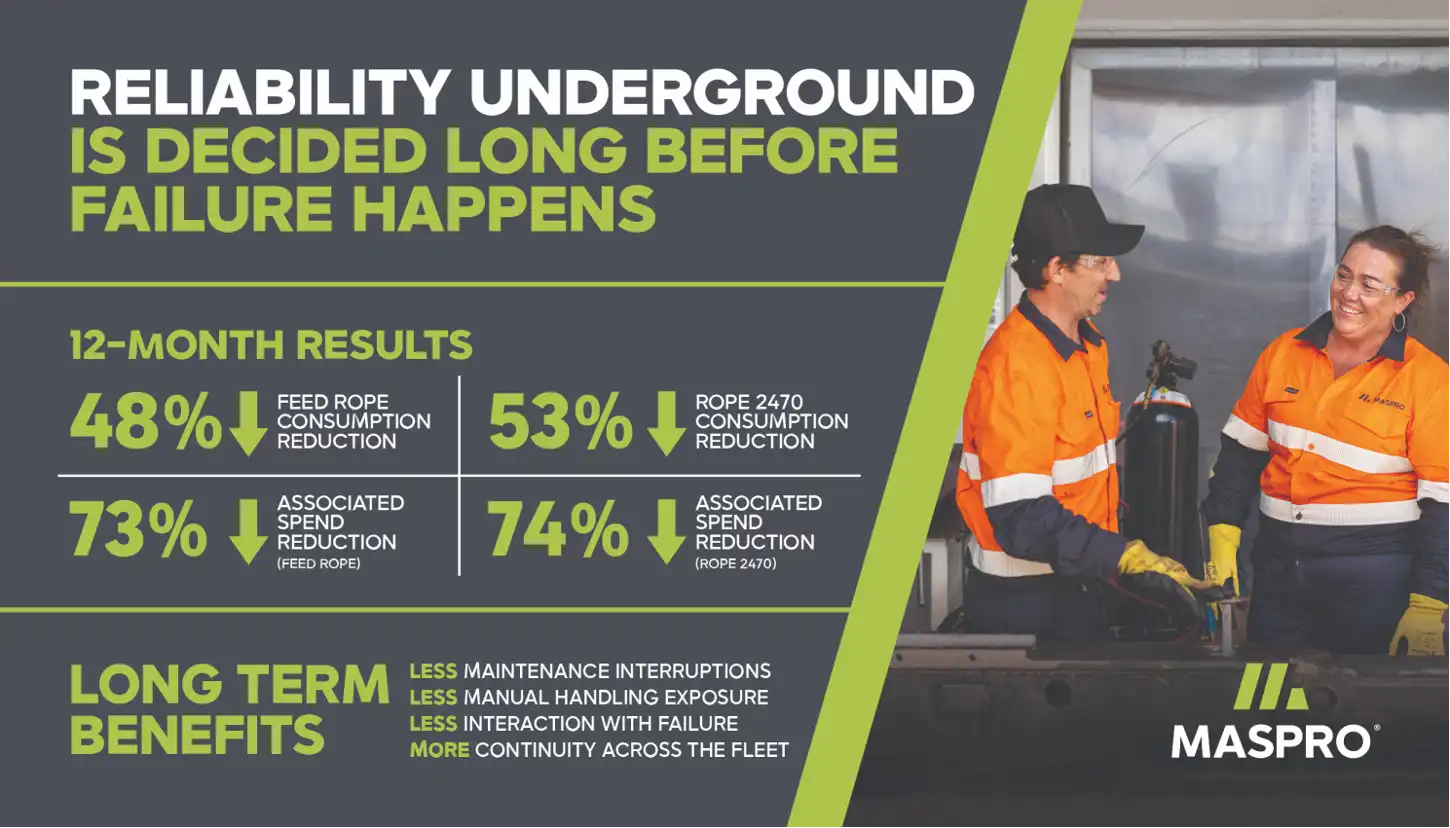
Over a 12-month period:
- Feed rope consumption reduced by 48% (188 to 98 units)
- Rope 2470 usage reduced by 53% (76 to 36 units)
- Associated spend has been reduced by more than 70% across both categories
But the most important outcome was not lower rope consumption. It was reduced operational interaction. Maintenance teams spent less time managing the issue. The operation experienced fewer interruptions. A recurring burden that had become part of the routine was removed.
Redefining reliability
Reliability is often measured by whether something failed. But from an operational perspective, that is a narrow definition.
A component can avoid catastrophic failure and still create significant operational drag through repeated intervention, labour exposure, and maintenance disruption.
That is why reliability should be viewed as a system outcome. Not simply a measure of durability. The most valuable reliability improvements are often the ones that remove recurring operational burdens before they become embedded in the way an operation works.
Because the most expensive reliability problems are not always the ones that stop production. Sometimes they are the ones everyone learns to live with.
A final operational question
What maintenance activity in your operation has become so routine that nobody questions whether it should still exist?
Because the moment repetitive intervention becomes accepted as normal, reliability risk doesn’t disappear. It simply becomes invisible.
Reliability has not improved. The organisation has simply become efficient at carrying the burden.